Addax News
Action Plan for the São Paulo Macrometropolis – Passenger Transport and Logistics – “PAM – TL”
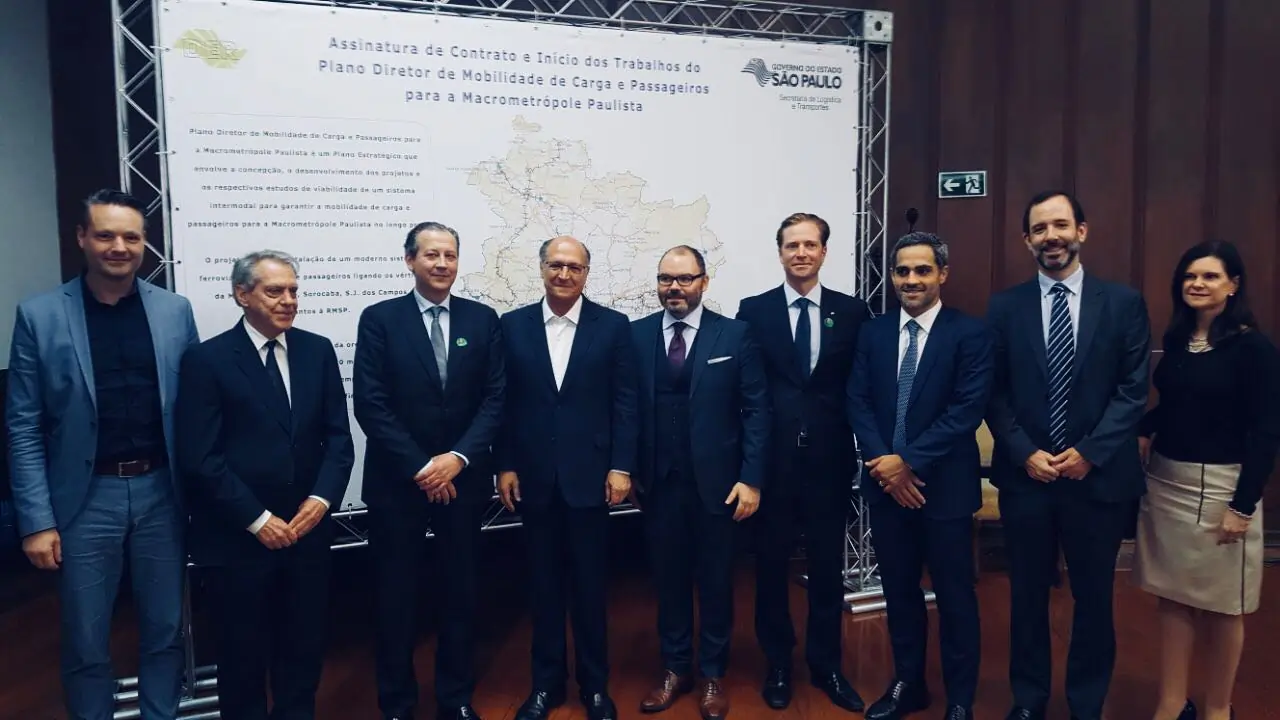
ADDAX, a member of the Consórcio Pró-TL (with Deutsche Bahn – Leader, Progen, TTC, and TozziniFreire), signed a R$20 million contract on 02/23/2018, funded by the IDB with a 20-month execution period, to develop the “PAM-TL – São Paulo Macrometropolis Action Plan – Transport and Logistics” study. The project consists of a Master Plan for Freight and Passenger Mobility that supports the São Paulo State Government in integrating transport and logistics policies. The signing took place at Palácio dos Bandeirantes, attended by Governor Geraldo Alckmin and Secretary Laurence Casagrande Lourenço.
Concessions and PPPs in Collective Public Passenger Transport: Some Reflections
Concessions and PPPs in Collective Public Passenger Transport: Some Reflections
There could be no more fitting moment to write on the subject of Concessions and PPPs – Public-Private Partnerships. The country has been immersed in an economic crisis over the past two years, and private participation in projects, notably in infrastructure, is seen as the solution to unlock investment. A provisional measure (MP 727 of 05/12/2016), recently issued by the interim government installed at the federal level, reflects this prevailing spirit by creating the PPI – Investment Partnerships Program, establishing certain institutional changes, but above all constituting yet another attempt to create a symbol that strengthens the environment for accelerating infrastructure investment. At the state level, specific programs or projects are frequently announced under the partnership model, whether concession or PPP. The same occurs at the municipal level, though to a lesser degree. Federal Concessions Law 8,987 dates from 1995, while its close cousin establishing Public-Private Partnerships is from the end of 2004, under No. 11,079, which renames the concession under Law 8,987/95 as a “Common” Concession, in order to differentiate it from the newly established PPPs, which are also Concessions, but only under the so-called “Sponsored” and “Administrative” modalities. Therefore, regardless of their designation, all of them are, in a sense, siblings — all “Concessions.” When speaking of “Concessions,” we may also be referring to a PPP. Mentioning a PPP, on the other hand, excludes the “Common” Concession. Because of this naming issue, it has become common practice to refer to the subject as: Concessions and PPPs. This way, there can be no doubt as to what is meant — namely, the three modalities of Concession: Common, Sponsored, and Administrative. It would have been simpler had the legislator amended Law 8,987/95 instead of creating a new law when introducing PPPs, since all of them are concessions. Perhaps the Administrative Concession would have deserved its own law, as it differs from the Common and Sponsored types by not requiring the delegation of a public service. The implications of this framework will be addressed throughout this article, whose purpose is to discuss Concessions and PPPs in the field of collective public passenger transport, presenting some “cases” based on the various concession modalities, as well as at different stages of structuring or implementation, whether successful or not. Above all, the aim is to understand the main determining factors.
Typically, the subject of Concessions and PPPs tends to occupy a space of ideological debate under the dichotomy of private versus state, or privatization versus nationalization. This viewpoint does not adequately reflect the issue, and it brings serious risks to the process of acceptance/approval, modeling, structuring, and management of a given project — especially in the case of collective public passenger transport, which is notably a public service governed by the Federal Constitution, as defined in Article 175. It is incumbent upon the Public Authority, in accordance with the law, directly or under a concession or permission regime, always through a public bidding process, to provide public services. When dealing with Concessions and PPPs for collective public passenger transport, the analyses must be subordinate to Planning and Public Policy. The concession regime is merely a mechanism for implementing and/or operating and managing the transport system, subsystem, or component in question, and it never replaces the constitutional role of the Public Authority, which is transformed into the Granting Authority. The private company, established as the concessionaire, carries out its role always in accordance with the contract and subsequent regulation, exercising greater freedom only with regard to associated ventures or projects (ancillary revenues), while still having to return at least part of that economic-financial return toward fare affordability (naturally, of the public service provided under the concession).
Therefore, privatizing a transport system, subsystem, or component is merely granting, for a set period, certain responsibilities. Even state-controlled or mixed-capital operators should be viewed as concessionaires, whether or not they are legally structured as such, since they constitute entities with a life of their own, forming corporations of a nature analogous to private concessionaires. The correct lens for the Structuring of Concessions and PPPs is, therefore, that of the project — not of its state or private constitution. In the evolution of economic history, if we once lived through feudalism and moved into the early stages of capitalism in its phase of primitive accumulation, from which commercial, industrial, monopolistic, and financial capitalism were sequentially consolidated, with periods coexisting alongside so-called real socialism, we can say that today we live in the era of project capitalism. An era in which the dividing line is no longer the origin of capital but rather its destination: the project is analyzed in isolation, and its structuring is based on diverse sources — whether shareholders, financiers, technology suppliers, operators, managers, and so on. However, the “project” dimension, whether it distances itself more or less from the “state” or more or less from the “private,” must in no way deny its “public” nature. It is precisely under this dimension that the public transport system, among others, must be understood. In light of this theoretical perspective, how can this framing be translated into real cases, and what are the actual consequences for structuring projects? It must be considered that the process of Structuring Concessions, in a broad sense — encompassing engineering, economic-financial, legal studies, among others — carries a unique level of complexity. It is as if, given the public-project dimension explained above, it represented a microcosm of the entire economy, requiring the concatenation of multiple variables in a specific locus. The project does not represent a single aspect: it differs radically from the typical conceptual representation of engineering and architecture — the sequential evolution of the functional, basic, and executive project. Often, the Executive Branch and oversight bodies attempt to resolve the implementation of public transport systems by assuming that what matters most is having a robust basic project or a detailed executive engineering project. Certainly, robust and qualified engineering studies are essential, but structuring a Concession or PPP does not depend on that alone. Structuring the “project” that will be granted goes well beyond that — not only forward, but in every direction, given the multidisciplinary nature already discussed.
The Government of the State of São Paulo issued a concession tender for the Airport Express in 2009. This was a selective-type collective public passenger transport system connecting downtown São Paulo to Guarulhos Airport. The modality adopted was the Common Concession. The legal characteristic of this modality, a priori, is that concession revenues come solely from fares charged to users and from ancillary revenues. The risks inherent to the concession are predominantly allocated to the private concessionaire. The project failed because the private sector’s perception of risk was that the internal rate of return did not compensate for the risks assigned to it. An attempt was made to structure a contract that would allocate risks differently, but the legal instrument adopted did not seem adequate at the time. A sponsored concession, or PPP, could have solved the problem, but the potential expenditure of public payments for this project was not considered reasonable by the administration, given the project’s selective nature (expected demand was 20,000 to 30,000 passengers, whereas a regular urban metro/train line carries hundreds of thousands, or even more than a million, passengers per day). Thus, the decision to abandon the project was based both on the project’s socioeconomic nature and on the difficulty of adapting the risk matrix to the Common Concession instrument.
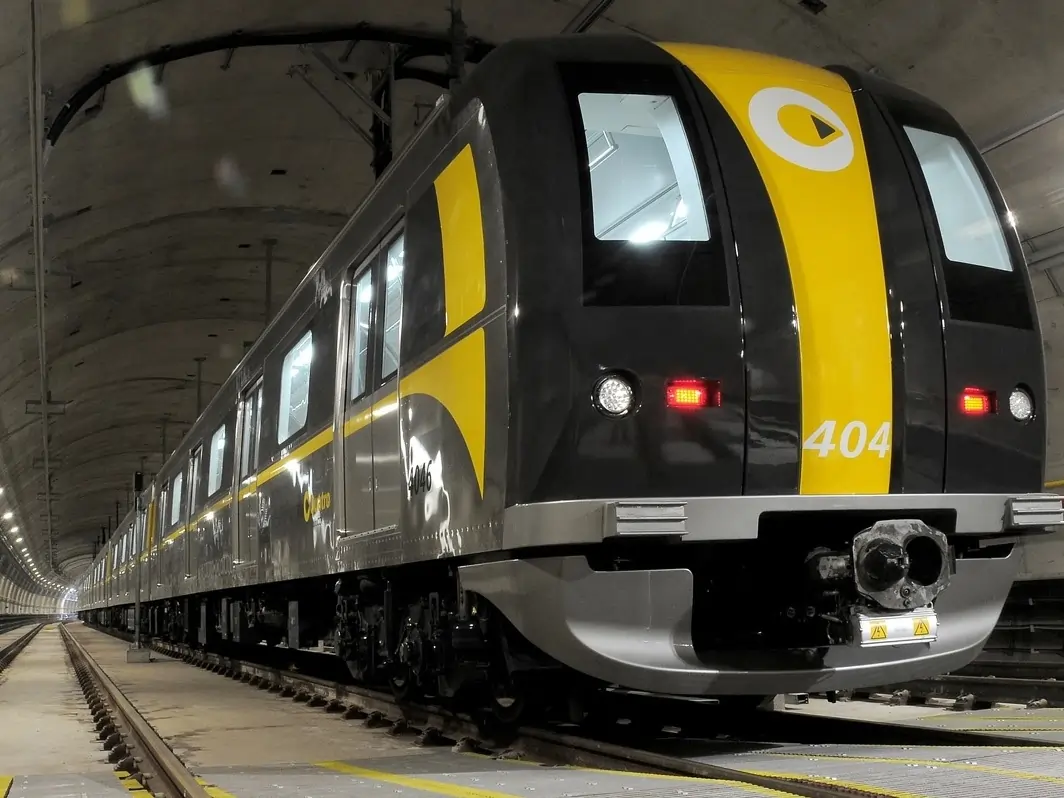
In 2013, the Government of the State of São Paulo issued a PPP tender, under the Sponsored Concession modality, for the implementation and operation of Metro Line 6 – Orange in São Paulo. Innovative for several reasons — both because it differed from previous models such as Line 4 – Yellow, and because it was the first to use a Resource Contribution mechanism during implementation (pre-operational phase) — it dared to delegate to the concessionaire the entire implementation and operation, starting from the engineering design studies, based on the tender’s guidelines. The model was successful; the contract was signed and implementation is underway, having required a sophisticated financial and guarantee structure. As a Sponsored Concession, the project requires, given its scale and the characteristics of metro-rail public transport, a significant expenditure of public resources, whether through contributions during construction or through payments made during operation. Fare collection will complement the concession’s revenues. The Line 6 PPP is a notable example of a Concession that reflects the optimization of financing and management mechanisms in an effective combination of public-private efforts aimed at achieving the project. It requires complex and lengthy structuring, as well as robust contract management. The key element in the success of the tender was the proper calibration of the risk matrix. The willingness and legal ability of the granting authority to mitigate risks — unlike in the Airport Express case — made the project viable. Underlying this is the high socioeconomic return, reflected in time savings for citizens, reduced transport system costs, and reduced pollution and accidents that a metro line of this scale provides, such that the large volume of public resources committed to the project is justified.
Where Is Mobility Heading?
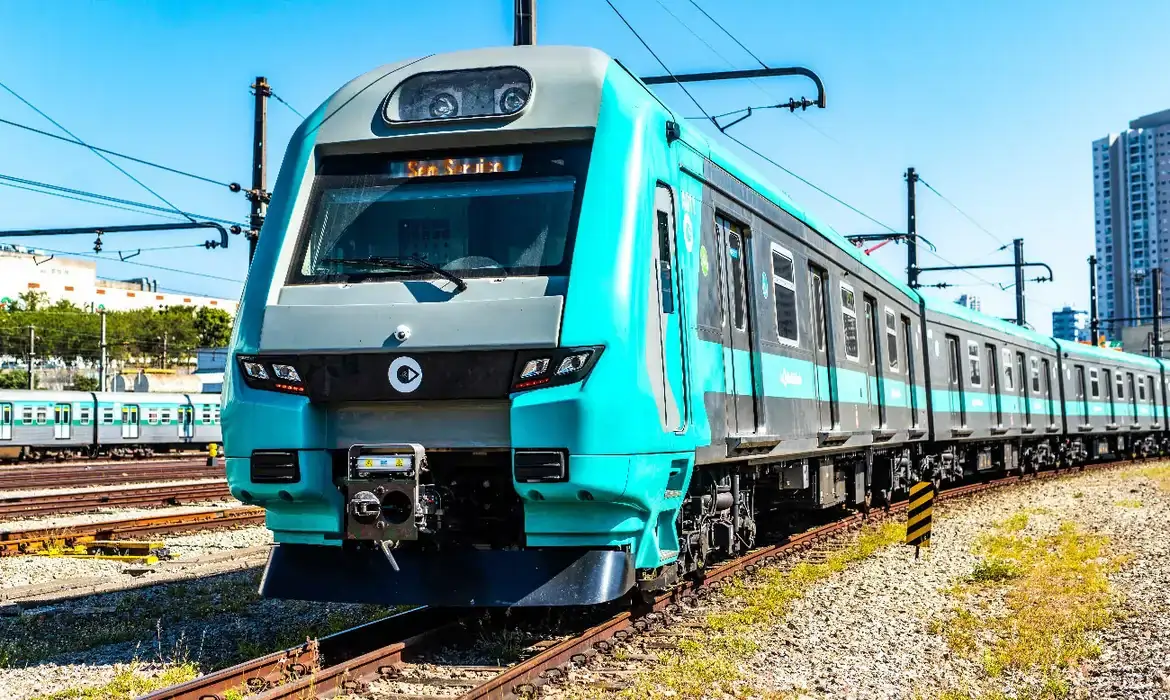
Digitalization in favor of transport services, electrification, autonomous vehicles, promotion of non-motorized forms of mobility, on-demand transport and apps, passenger information and communication, and more modern financing models are some of the global urban mobility trends discussed at a seminar held last Tuesday, June 12, 2017, by UITP – International Association of Public Transport for Latin America, at the Sindicato dos Engenheiros do Estado de São Paulo, in the central region of the São Paulo capital.